
By Adv Happy Raligilia
The UNISA Vaal Open Day: A Gathering on Ethics and Legal Practice
On Saturday, 07 March 2026, I had the privilege of participating in an event that reminded me why mentorship and scholarly engagement remain vital to the development of both the legal profession and academia. The Meyerton Town Hall hosted a robust debate on the future of legal practice and the skies above South Africa, as the Black Lawyers Association Student Chapter (BLASC) UNISA Vaal Branch held its highly anticipated Open Day.
Under the leadership of branch chairman Mr Thato Selowa, the event was themed “Navigating Ethical Practice in the Legal Field.” It brought together legal practitioners, academics, and industry stakeholders to reflect on ethical standard expected from legal professionals.
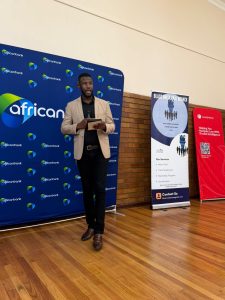
Representing the Aviation Law Working Group led by Prof Angelo Dube, I had the opportunity to present on a field that is often perceived as distant or inaccessible to many law students. My intention was to demystify aviation law and demonstrate that it is not merely a technical discipline reserved for a few specialists. Rather, it is a vital industry governing aircraft operation, infrastructure maintenance, and the delicate balance of rights between passengers and commercial airlines.
Ethics at the Centre of Legal Practice
The discussion quickly moved beyond technical regulation to something far more fundamental in the form of professional character. I emphasised that the growing field of aviation law requires not only legal expertise but also ethical maturity. As the sector evolves, it will increasingly require practitioners who are willing to pursue dedicated postgraduate development through LLM, MPhil, and LLD qualifications, while maintaining the highest standards of professional integrity.
This sentiment resonated strongly with the other distinguished speakers on the panel. Ms Lunamo Mgcwaba reminded students that ethics is not simply a subject studied in textbooks, but a matter of individual character. “Ethical decisions are mostly taken privately and behind closed doors,” she noted.
The panel also confronted the systemic challenges that continue to shape the legal profession. Adv Don Mahon SC acknowledged that the profession often places excessive emphasis on academic grades as a gateway to success. While academic excellence is important, genuine success in the legal profession requires a foundational commitment to ethical conduct.
Acting Labour Court Judge Ms Connie Phakedi issued a stern warning against plagiarism, cautioning students that shortcuts taken during their studies often evolve into deeper professional shortcomings later in their careers. Adv Sechaba Momoepa further commended the Legal Practice Council (LPC) for its firm approach in addressing professional misconduct, signalling that the era of impunity within the legal sector is steadily coming to an end.
Advocating for the Rural Aviation Economy
Beyond discussions about the courtroom, the event also allowed me to introduce a project that is particularly close to my heart. I spoke about the Engaged Scholarship on Rural Aviation Economy, a flagship initiative that I lead at the University of South Africa, together with Prof Angelo Dube and Mr Sipho Matshie.
The project seeks to challenge the exclusionary structures that currently shape South Africa’s aviation governance. In many instances, long-term leasing arrangements have entrenched a form of leaseholder capture that effectively excludes surrounding communities from meaningful economic participation.
In the Vaal region, this reality is visible in facilities such as the Vereeniging and Vanderbijlpark aerodromes, as well as the Klipriver airfield in Midvaal. While these sites are occasionally accessible to the public during airshows, he argued that the systemic barriers prevent genuine economic benefit for the black communities in the Vaal. The scholarship project aims to transform these spaces from exclusive enclaves into accessible economic assets for rural towns and municipalities.
A Strong Turnout and Growing Student Engagement
The event was marked by a strong turnout, signalling the growing influence of the BLASC. Other notable stakeholders in attendance included the Black Forum Student Chapter, the UNISA Law Clinic, representatives from LexisNexis, the IEC, and African Bank. Attendees representing BLASC travelled from as far as Johannesburg, Florida, Ekurhuleni, and Newcastle to participate in the discourse.
As the event concluded, the message was clear: the next generation of lawyers in the Vaal is being challenged not just to master the law, but to reshape it, ensuring that it serves the needs of both the aviation industry and the underserved communities it currently overlooks.
My Journey with Afrikan Peer Growth Network: A Mentorship Foundation
When I first encountered APGroN, I did so as a mentee. Like many other scholars, I was searching for spaces where my research ideas could be tested and refined. APGroN provided exactly that environment. Its conferences and scholarly engagements offered emerging researchers the opportunity to present their work, receive critical feedback, and develop the confidence necessary to contribute to academic discourse.
The Mentorship Model of APGroN
What distinguishes APGroN is that its mentorship extends far beyond a single presentation or event. Senior scholars within the network guide young researchers through the demanding process of academic writing, publication, and intellectual development. They challenge assumptions, refine arguments, and encourage scholars to situate their work within broader African realities.
Over time, something remarkable begins to happen within this ecosystem. Those who once arrived as mentees gradually assume the responsibility of mentoring others. They return to APGroN not only as presenters, but also as panellists, reviewers, editors, and academic leaders.
In the legal field, this kind of mentorship is particularly important. The demands of legal scholarship often extend beyond doctrinal analysis to include policy engagement, governance reform, and interdisciplinary collaboration. Through its mentorship culture, APGroN equips scholars with the intellectual confidence to participate in these broader conversations.
Concluding Remarks
As I reflected on the conversations that took place in Meyerton, I realised that the spirit of mentorship present at the event mirrors the very ethos that APGroN has nurtured for years. Students arrived seeking knowledge and direction. Practitioners shared experience and insight. Scholars connected research with societal needs.
In many ways, this is precisely how mentorship should function. For the young scholars and students who will encounter APGroN in the years ahead, my message is simple: embrace the opportunity to learn, to grow, and to contribute. The journey may begin with mentorship, but it does not end there.
In time, each mentee is called to become a mentor.
And it is through that continuous exchange of knowledge, guidance, and responsibility that the APGroN community continues to grow.
Adv Happy Raligilia is a Senior Law Lecturer at Unisa, Project leader of the Engaged Scholarship on the Rural Aviation Economy and a member of the Aviation Law Working Group. He writes herein in his personal capacity.